.JPG&w=3840&q=75)
Maple
Butterfly
Acer palmatum
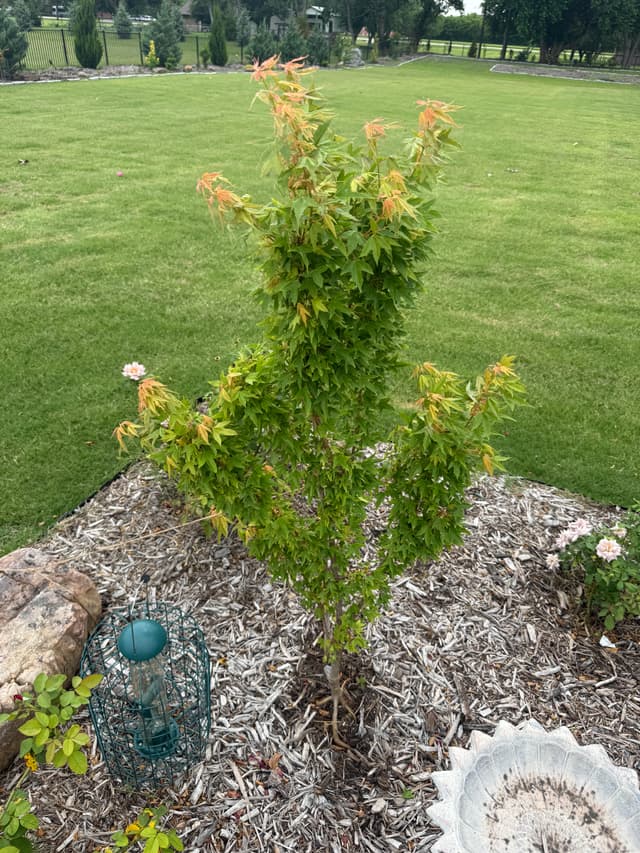
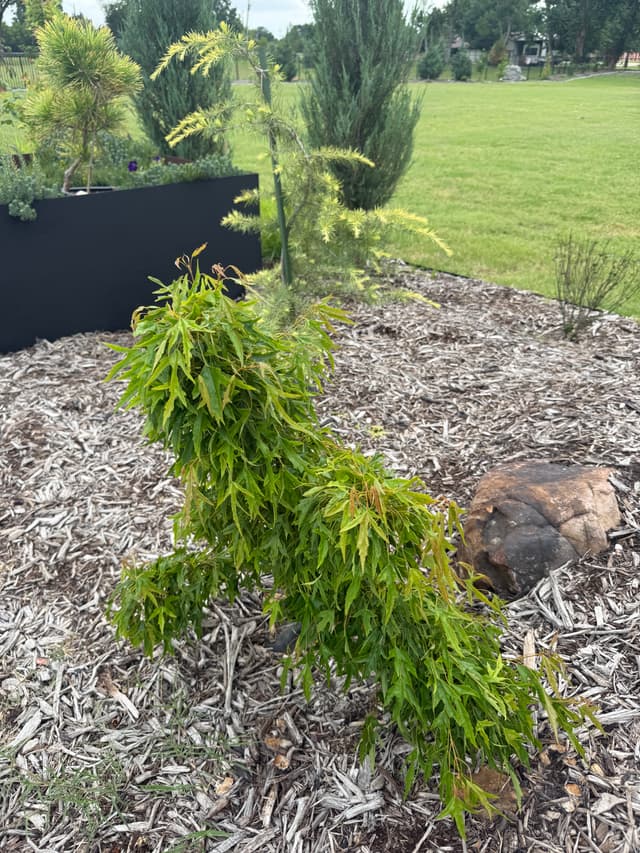
An iconic, classic variegated Japanese Maple prized for its elegant, upright, and densely twiggy shrub-like form. The deeply divided, narrow-lobed leaves emerge in early spring with a stunning cream-white border heavily suffused with soft magenta and pink highlights over a sea-green center. By summer, the pink tones fade to leave a clean, crisp green-and-white variegation pattern where the leaf margins naturally cup and twist, mimicking the appearance of resting butterflies. Fall transitions the variegated margins into striking shades of magenta and brilliant scarlet.
Growing Specifications
- Height
- 8-12 feet
- Spread
- 6-8 feet
- Watering
- Consistent, uniform soil moisture required
- Light
- Morning sun, afternoon shade
- Heat Tolerance
- Moderate to Good; handles heat well when properly shielded from direct sun
- Growth Rate
- Slow to Moderate
- Soil Requirement
- Moist, rich, sharply draining, slightly acidic
North Texas Micro-climate Notes
Expert Curated Selection. Because its pale, cream-white variegated leaf margins lack dense protective chlorophyll, this cultivar is exceptionally vulnerable to leaf-scorch and windburn under intense conditions. In North Texas, it demands total protection from the harsh 1 PM to 6 PM summer sun and drying southwest winds. Situate it in a sheltered courtyard or under a high pine canopy, backed by a generous layer of organic mulch.
History & Lineage
- INTRODUCED BY
- Traditional Japanese Horticulture / Evaluated by Dr. J.D. Vertrees
- HISTORY
- An ancient heirloom selection originating in Japan, known historically in literature as 'Kocho nishiki' (Butterfly Brocade). It was brought to Western cultivation and formally popularized by the legendary maple authority Dr. J.D. Vertrees in his landmark publications, eventually earning the Royal Horticultural Society's prestigious Award of Garden Merit.
Care Instructions
Requires meticulously loose, fast-draining soil mixes to avoid root decline. Pruning should be kept to a minimum; clean out interior dead wood during winter dormancy to showcase its delicate branching architecture. Provide regular deep soaking during summer dry spells.
Landscape Usage
Superb for illuminating dark, shady garden corners, highly recommended for container growing, or positioned as a focal accent near stone water features and pathways in a modern Japandi landscape layout.
Fun Fact
The crinkled, slightly twisted nature of its foliage isn't a sign of stress—it is the signature trait of 'Butterfly' that adds to its unique architectural texture, allowing the silver-white margins to catch the light from all angles.
Awards
Royal Horticultural Society (RHS) Award of Garden Merit