Growing Guide

Expert cultivation guidance for North Texas micro-climate conditions. Soil preparation, summer survival, pruning protocols, and micro-climate strategies for maples and conifers.

Soil Preparation

How to amend North Texas clay soil for optimal tree root growth.

Understanding Texas Clay

North Texas sits in the Blackland Prairie region with heavy, alkaline clay soils (pH 7.5–8.5) that drain poorly and restrict oxygen. Maples and most deciduous trees need well-drained planting sites to establish healthy root systems.

The Right Approach

For our climate, wide-and-shallow planting beats narrow-and-deep holes. Dig a hole 2–3 feet wider than the root ball, only as deep as the root ball height. Mix native clay with 30–40% composted pine bark and coarse sand to improve drainage around the root zone.

Raised Mound Planting

In heavy clay areas, build a raised mound 6–12 inches above grade. This ensures winter water drains away from roots and creates deeper rooting depth in summer heat. Maples especially hate "wet feet" during our cold front periods.

Summer Survival

Strategies for keeping your trees alive during North Texas extreme heat.

The Heat Challenge

North Texas summers regularly exceed 100°F for weeks at a time. Newly planted trees need consistent moisture for the first two growing seasons. Established maples in our climate can handle heat but will show leaf scorch during extreme dry spells.

Deep Watering Protocol

Water deeply but infrequently — encourage deep rooting rather than shallow surface roots. Use a soaker hose or drip system around the drip line (not at the trunk). In summer, water every 5–7 days during peak heat unless significant rain occurs.

Mulch Everything

Apply 2–3 inches of shredded bark mulch in a wide ring around each tree. Keep mulch 3 inches away from the trunk to prevent rot. This conserves moisture, moderates soil temperature, and slowly adds organic matter as it breaks down.

Anti-Desiccant Spray

For evergreen maples (like A. palmatum dissecta) and camellias, apply anti-desiccant (like Wilt-Pruf) in late fall and mid-winter. Texas wind causes desiccation — trees lose more moisture than roots can absorb during cold snaps.

Pruning

When and how to prune maples and conifers in North Texas.

Maple Pruning Rules

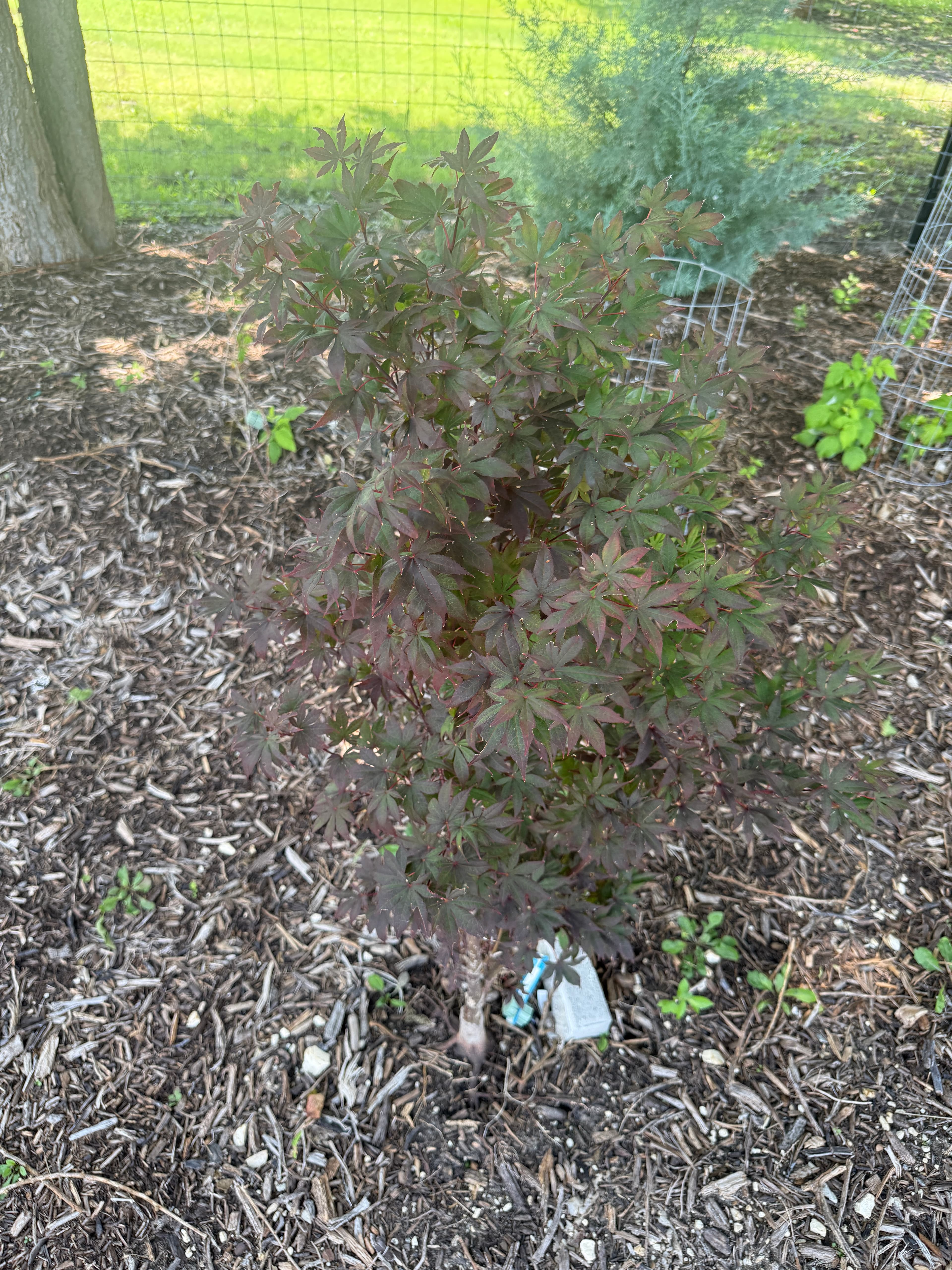
Only prune maples during full summer months (June–July) when sap is flowing and "bleeding" is minimal. Winter/spring pruning causes excessive sap flow that weakens the tree. Remove dead branches, crossing rubs, and shape young trees for structure.

Conifer Pruning

For Junipers and Yews, prune in late spring when new growth softens. Never cut into old wood — conifers cannot regenerate from bare trunks. Tip-prune to shape and thin interior branches for air circulation.

Texas-Specific Timing

In North Texas, use the growing season as your guide. Early spring (February) is too early — wait for last frost date. Late August onward is acceptable as temperatures moderate. The key windows are: June for light shaping, and October–November for major structural work.

Micro-Climate Care

Leverage your property's unique micro-climates for optimal tree placement.

South-Facing Walls

South walls in Texas create a heat mirror — up to 10–15°F warmer. Plant heat-tolerant species nearby (A. palmatum 'Atropurpureum', A. buergerianum). Avoid placing tender Japanese maples directly against south exposure.

North-Facing Sheltered Areas

North-facing walls and under-story areas provide shade and moisture retention — ideal for understory species like A. palmatum, A. shirasawanum ('Aureum'), and conifers (Abies, Juniperus). These are your micro-climate treasures.

Under Large Trees

The canopy of a mature oak or magnolia creates a shaded, moist micro-climate. Plant shade-tolerant understorey maples and conifers here. Watch for root competition — water deeply during establishment.

Wind Breaks

North Texas sees cold north winds (arctic fronts) and hot southwest winds in summer. Use evergreen breaks (Juniperus, Ilex) to protect tender specimens. A windbreak on the north/northwest side can make a dramatic difference.