Conifer
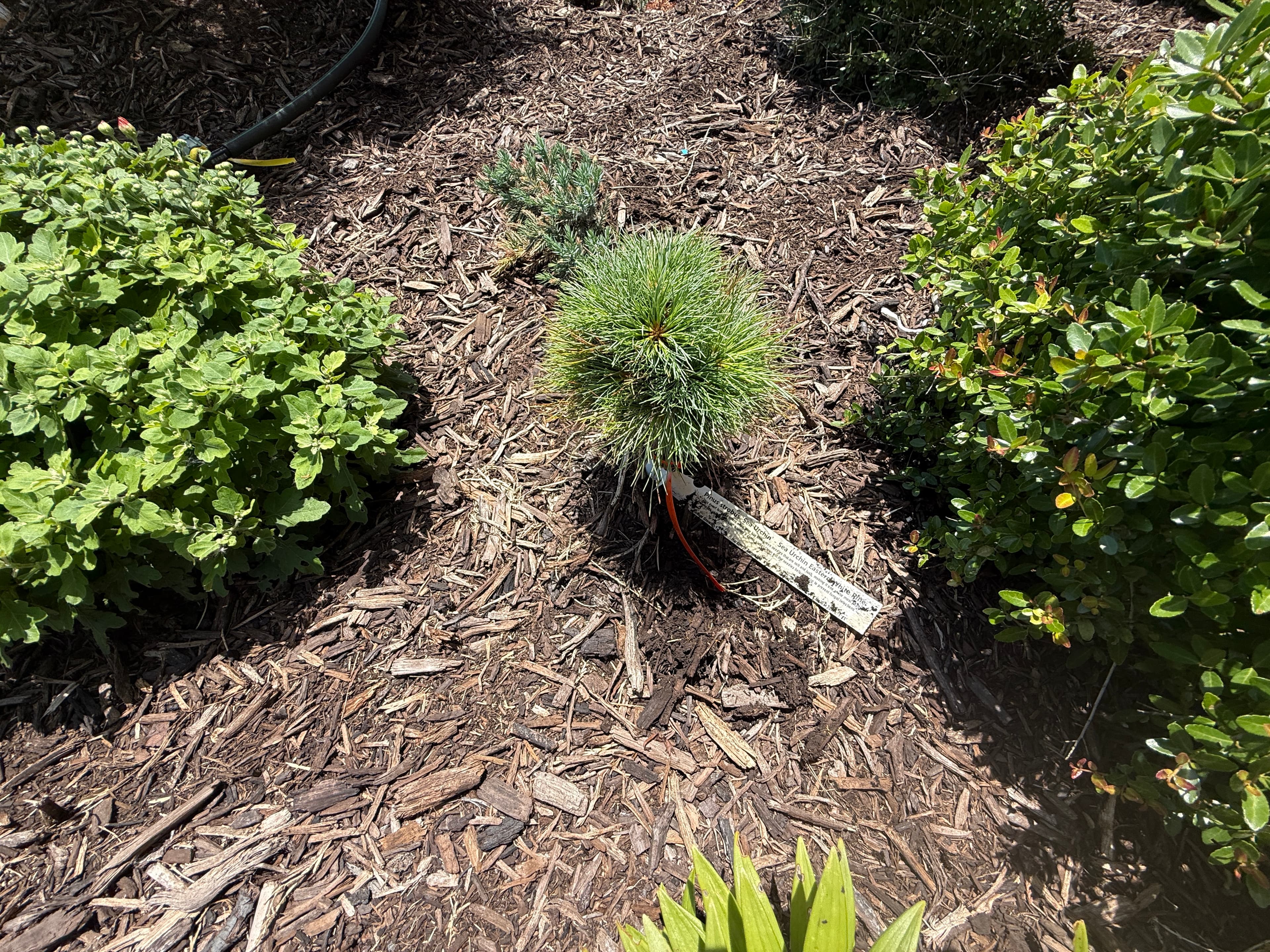
Sea Urchin
Pinus strobus
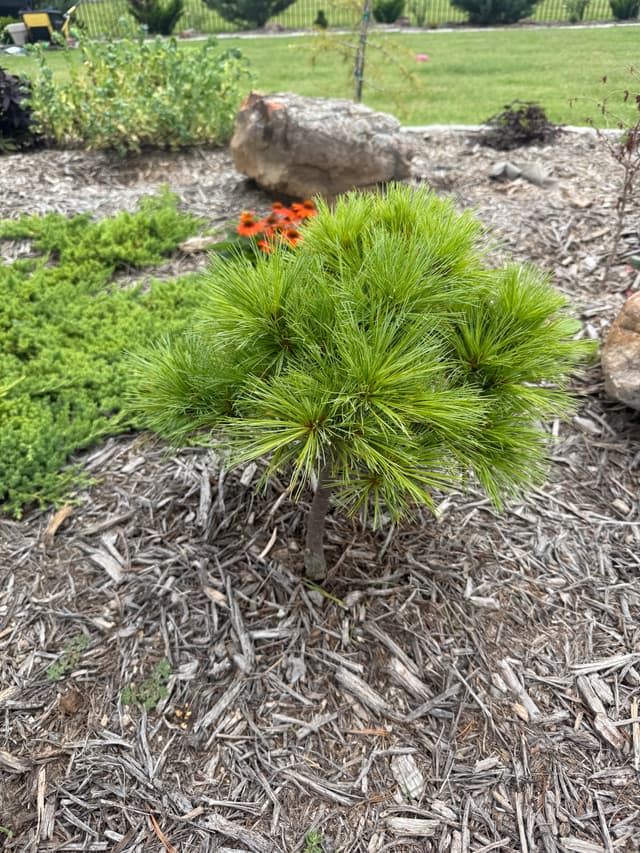
An extremely dwarf, densely branched selection of Eastern White Pine, forming a tight globe with branches radiating outward in a pattern reminiscent of its namesake sea urchin. Like other dwarf white pine selections in the collection, its soft, five-needle bundles give it a fine, billowy texture despite its compact, tightly controlled overall form.
Growing Specifications
- Height
- Extremely compact dwarf globe form; naturally very slow-growing
- Spread
- Extremely compact dwarf globe form; naturally very slow-growing
- Watering
- Moderate; prefers uniform, consistent baseline moisture profile but requires excellent aeration
- Light
- Morning Sun to Partial Shade
- Heat Tolerance
- Moderate; requires thoughtful positioning and root insulation in the South
- Growth Rate
- Slow
- Soil Requirement
- Sharply draining, light, porous, organic-rich, strongly acidic to neutral (pH 5.0-6.5)
North Texas Micro-climate Notes
Expert Curated Selection. Because Pinus strobus is native to cooler, acidic northern environments, cultivating this selection in North Texas requires specific microclimate management similar to the collection's other dwarf white pines — a protected northeast-facing location with morning sun and afternoon shade, planted on an elevated berm amended with expanded shale, and topped with a thick mulch layer.
Care Instructions
Must be planted slightly above grade in a loose, high-porosity aggregate soil mix; highly prone to root decline in stagnant or alkaline conditions. Provide a deep, slow-soaking root irrigation cycle during hot summer droughts.
Landscape Usage
Perfect as a soft textural anchor in modern rock gardens, positioned beautifully alongside heavy gray boulders, or featured as a container specimen in a Japandi patio setting.
Fun Fact
Like the collection's other dwarf Eastern White Pine selections, this cultivar originated as a witches' broom mutation — a naturally occurring, tightly congested growth anomaly found on a standard-size tree and then propagated for its compact, well-behaved form.