Conifer
Merrimack
Pinus strobus
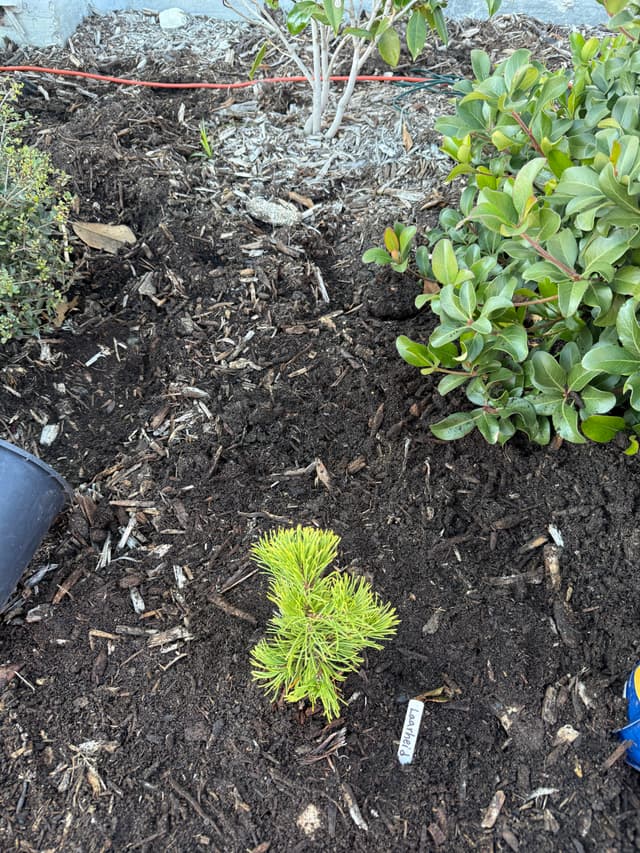
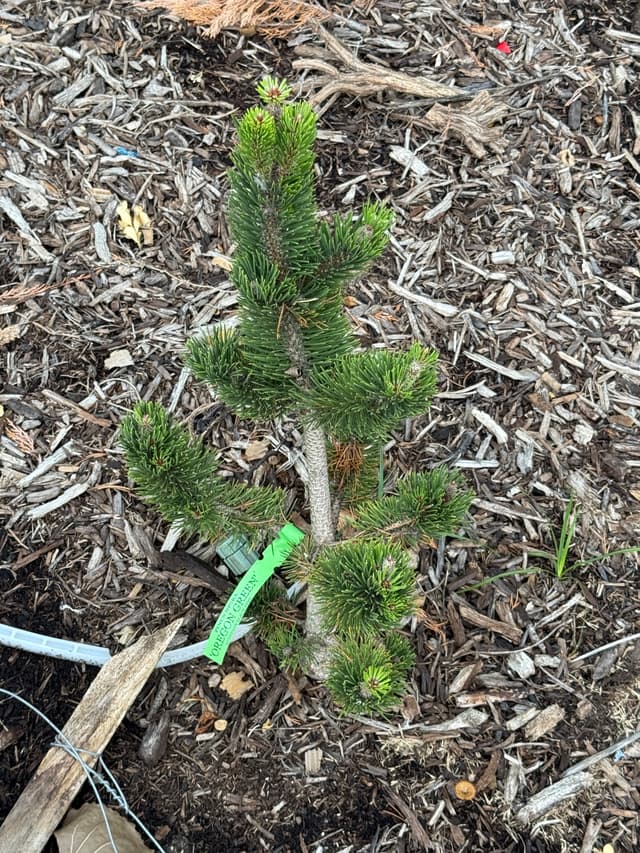
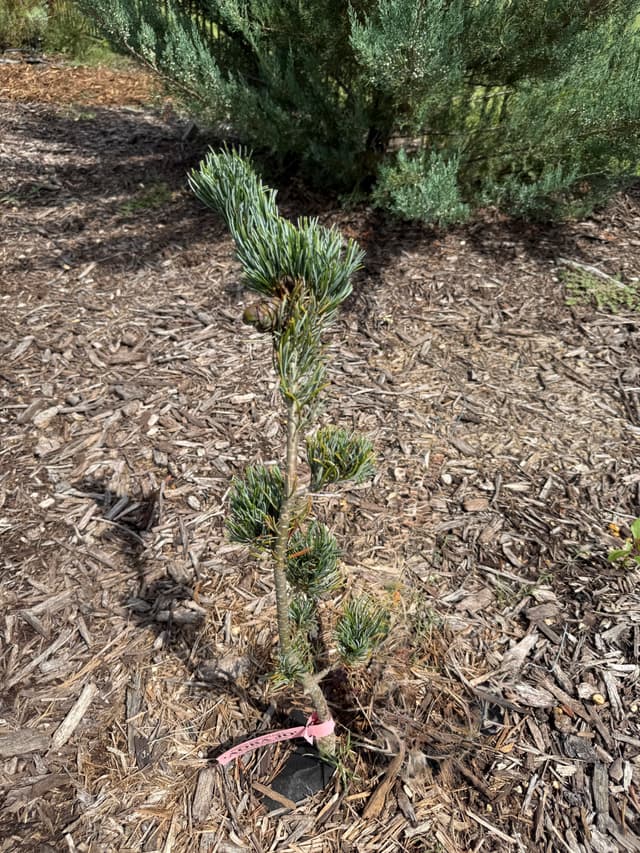
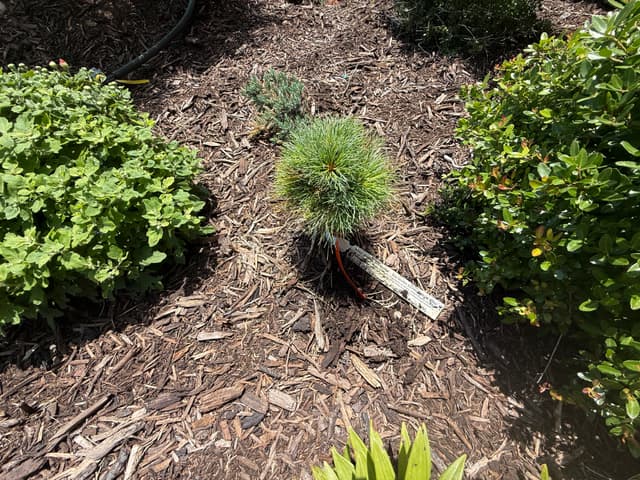
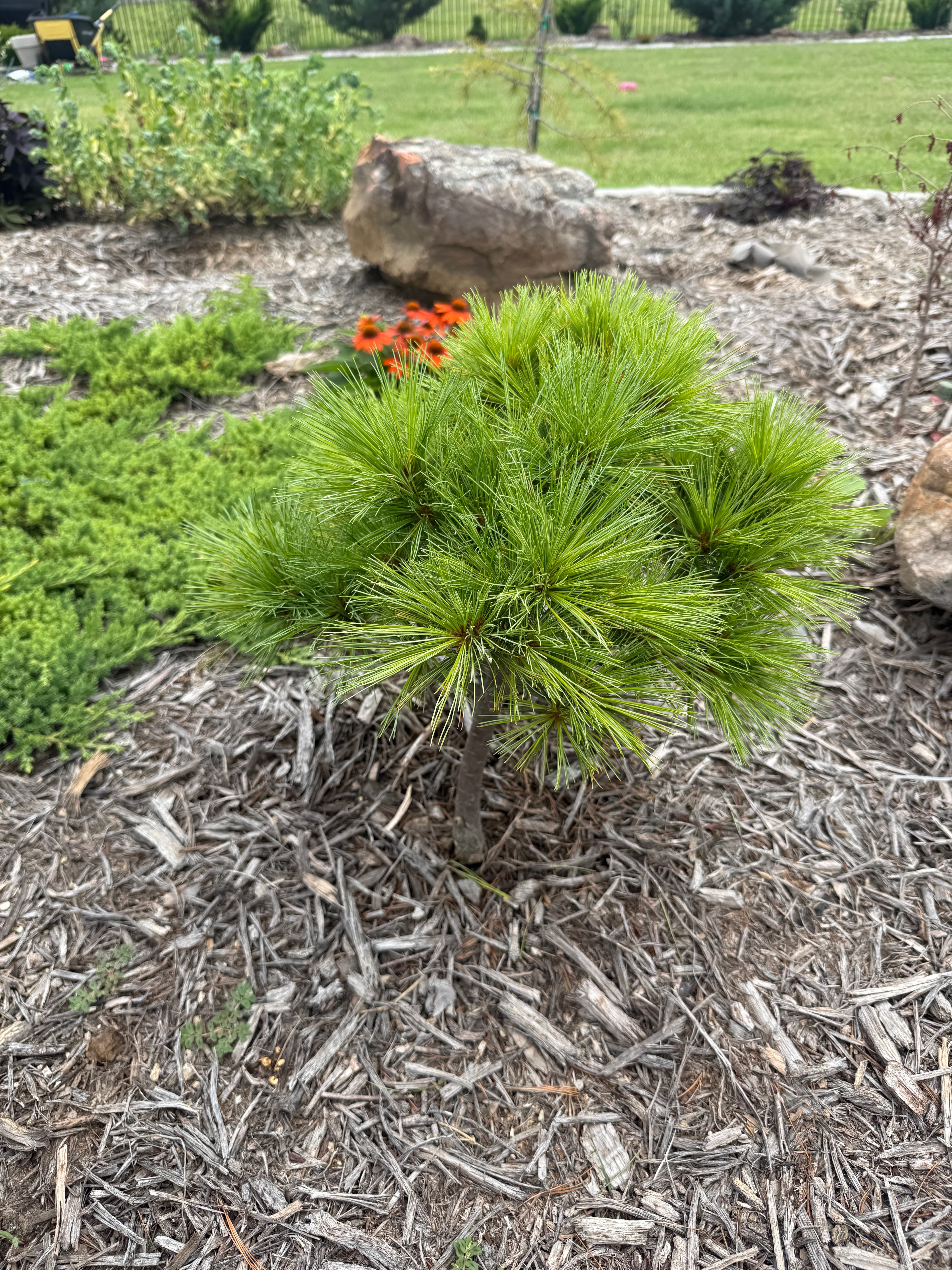
A magnificent, fine-textured dwarf evergreen conifer selection. 'Merrimack' is highly distinct for its dense, tightly compact, and broadly global-to-oval growth architecture. Its exceptionally soft, slender, flexible needles are bundled in groups of five, creating a billowy, cloud-like aesthetic across the branches. The foliage exhibits an attractive blue-green hue infused with a silvery-white stripe on the inner surfaces, giving the entire specimen a shimmering, multi-toned effect. Its fine needle texture and neatly controlled geometric shape lend an immediate sense of peaceful luxury to premium garden spaces.
Growing Specifications
- Height
- 4-5 feet (At 10 years; matures very slowly into a broad 6-8 foot structural dome over decades)
- Spread
- 5-6 feet (Develops a charmingly wide, rounded, pillow-like silhouette)
- Watering
- Moderate; prefers uniform, consistent baseline moisture profile but requires excellent aeration
- Light
- Morning Sun to Partial Shade
- Heat Tolerance
- Moderate; requires thoughtful positioning and root insulation in the South
- Growth Rate
- Slow (Puts on a highly controlled 3-5 inches of tight structural extension per year)
- Soil Requirement
- Sharply draining, light, porous, organic-rich, strongly acidic to neutral (pH 5.0-6.5)
North Texas Micro-climate Notes
Expert Curated Selection. Because Pinus strobus is native to cooler, acidic northern environments, cultivating 'Merrimack' in North Texas requires specific microclimate management. This tree will struggle under the intense, baking 3 PM southwest radiant sun and dry wind corridors. Situate it in a protected northeast-facing location where it receives pristine morning sun up until noon, followed by high, filtered canopy shade. It is highly intolerant of heavy, compacted native clay; always plant on an elevated berm heavily amended with expanded shale and top-dress with a thick 3-inch layer of organic pine bark mulch to stabilize root temperatures.
History & Lineage
- INTRODUCED BY
- Sidney Waxman (University of Connecticut)
- HISTORY
- Discovered, selected, and named in the late 20th century by the legendary conifer researcher Dr. Sidney Waxman at the University of Connecticut's agricultural experiment station. Discovered as a stable witches' broom mutation near the Merrimack River region, it was introduced to the collector market as part of a revolutionary series of compact white pine selections designed for intimate, structured modern landscapes.
Care Instructions
Must be planted slightly above grade in a loose, high-porosity aggregate soil mix; highly prone to root decline in stagnant or alkaline conditions. Provide a deep, slow-soaking root irrigation cycle during hot summer droughts, ensuring the surrounding soil remains moist but completely free of standing water. Minimal pruning is required, though gentle tip-pinning of new 'candles' in late spring can further tighten its cloud-like geometric shell.
Landscape Usage
Perfect as a soft textural anchor in modern rock gardens, positioned beautifully alongside heavy gray boulders, framing entry pathways, or featured as an elite cloud-pruned structural focal specimen in a large Japandi patio container.
Fun Fact
This tree originated as a 'witches' broom'—a tight, naturally occurring genetic cluster mutation found on a standard Eastern White Pine tree. While the native species can tower up to 100 feet tall in northern forests, this selection keeps its nodes incredibly compact, forming a perfectly behaved, cloud-like mound that never outgrows its space.
Awards
Highly acclaimed throughout international conifer societies for its exceptional cloud-like texture and superior dwarf geometric stability