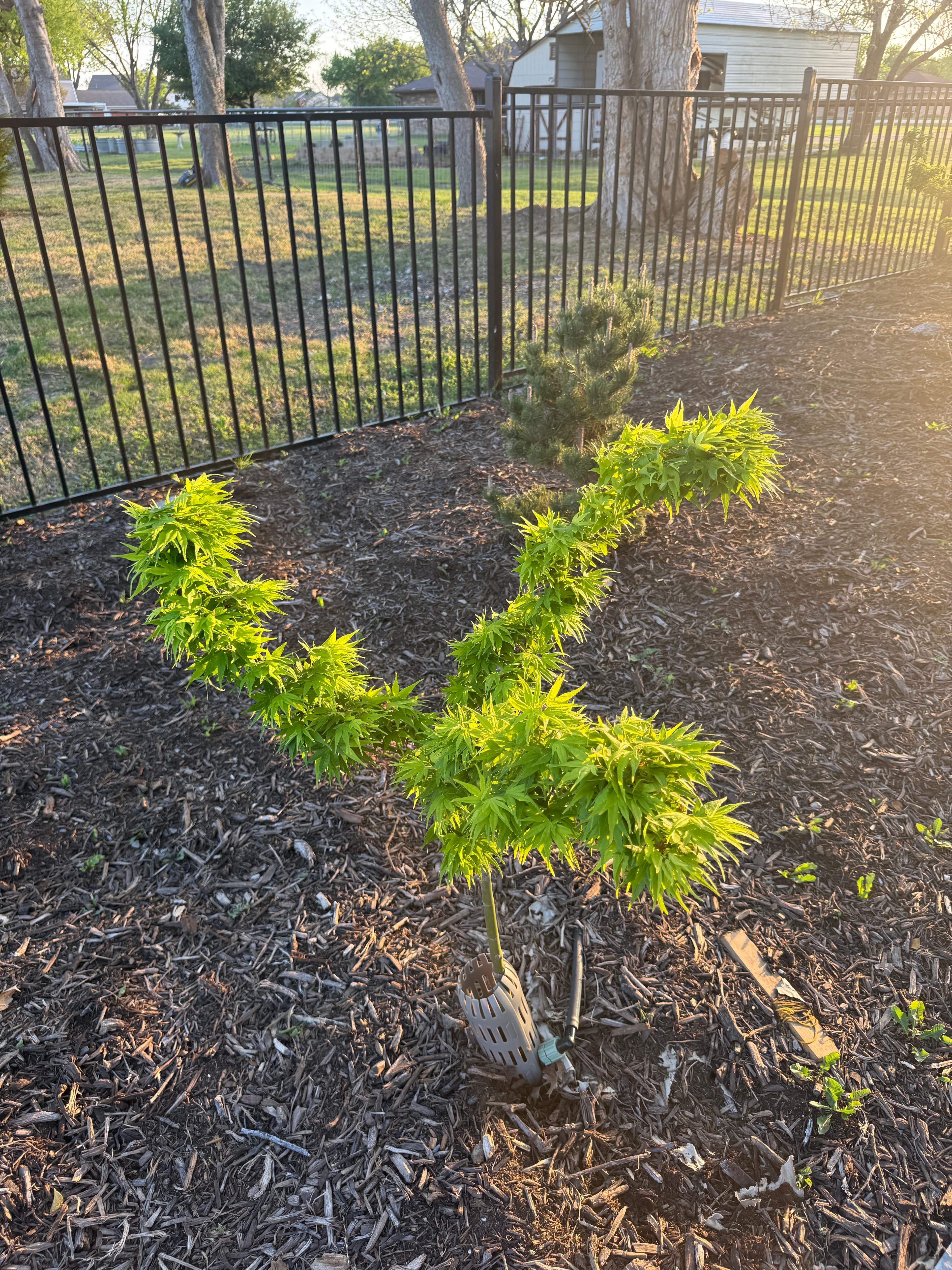
Maple
Mikawa Yatsubusa
Acer palmatum
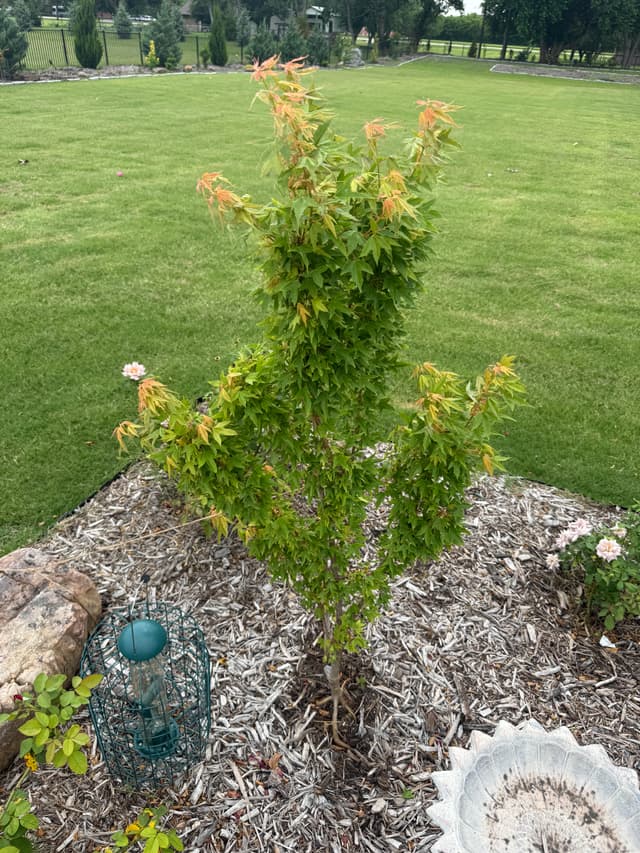
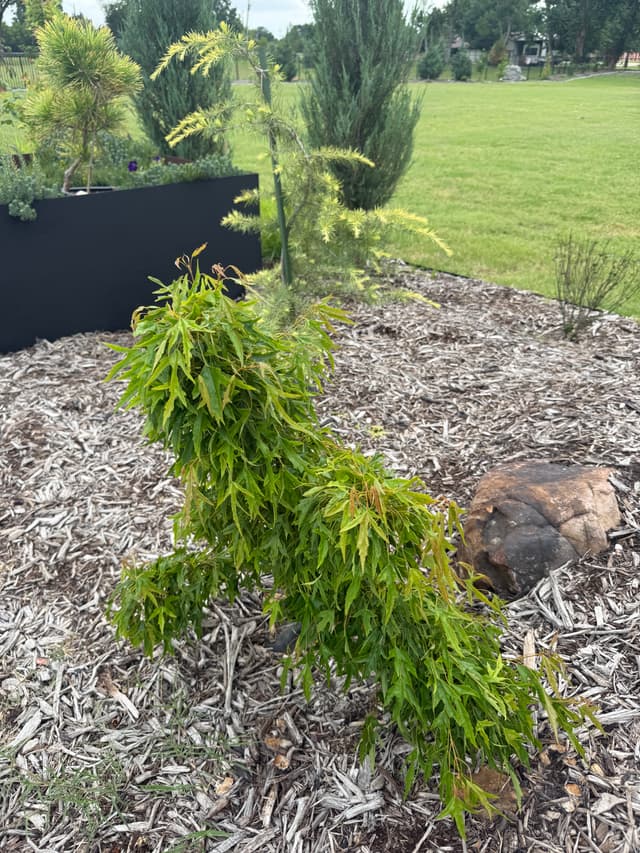
Widely regarded as the pinnacle of dwarf Japanese Maples. 'Mikawa Yatsubusa' exhibits a strikingly sculptural, multi-tiered habit with ultra-short internodes. Its medium-green leaves are clustered tightly together, overlapping uniquely like shingles on a pagoda roof or a green waterfall cascade. New spring growth emerges a bright chartreuse with light orange margins, maturing to deep emerald in summer, and shifting to a breathtaking, uniform display of glowing yellow-gold and fiery scarlet in autumn.
Growing Specifications
- Height
- 4-6 feet (Long-term maturity over 15+ years)
- Spread
- 4-5 feet
- Watering
- Moderate; requires regular deep-soaking but demands flawless soil drainage
- Light
- Morning sun, afternoon shade
- Heat Tolerance
- Excellent; one of the toughest, most sun-stable dwarf cultivars known
- Growth Rate
- Slow (Typically puts on 2-3 inches of compact structural growth per year)
- Soil Requirement
- Sharply draining, porous, loose, slightly acidic to neutral
North Texas Micro-climate Notes
Expert Curated Selection. Don't be fooled by its dwarf classification—this tree is exceptionally tough. Its heavy, rigid leaf substance gives it a natural defense mechanism against hot Southern climates, preventing cell-wall collapse. In North Texas, give it morning sun to lock in the tightest, most compact tier spacing, and shelter it from the baking late afternoon 3 PM sun to keep the foliage tip-pristine.
History & Lineage
- INTRODUCED BY
- Traditional Japanese Horticulture
- HISTORY
- Discovered as a rare seedling mutation in Japan and cherished for generations by artisan nurserymen. It was brought to Western cultivation in the late 20th century, heavily documented and praised by legendary authority Dr. J.D. Vertrees, and ultimately awarded the Royal Horticultural Society's highly prestigious Award of Garden Merit.
Care Instructions
Must be planted in highly porous soil amended with expanded shale or coarse organic matter to prevent heavy soil compaction. Avoid over-watering or stagnant winter conditions. Pruning is rarely needed except to selectively clear thin twigs from the inner trunk layers to highlight its incredible twisting wood structure.
Landscape Usage
An absolute showstopper as a focal courtyard patio container, tucked beautifully alongside large landscape boulders, or positioned as a living sculpture in an authentic modern Japandi garden design.
Fun Fact
The word 'Yatsubusa' implies a dwarf with multi-budded, crowded node clusters, while 'Mikawa' refers to the historic Japanese province of its origin. This tree's architectural multi-layered layout makes it look like an instantly styled, decades-old natural bonsai specimen right out of the ground.
Awards
Royal Horticultural Society (RHS) Award of Garden Merit