Maple
Mai Kujaku
Acer japonicum
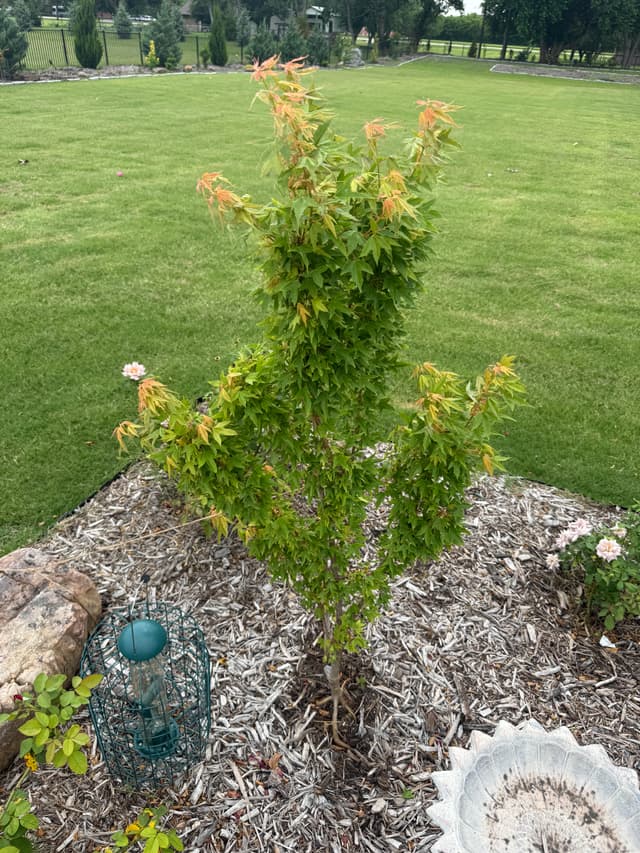
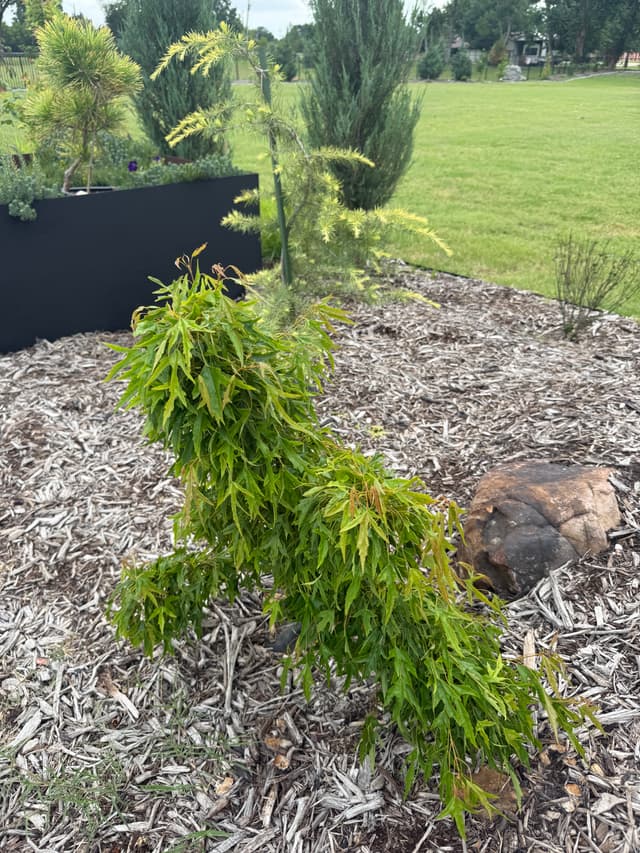
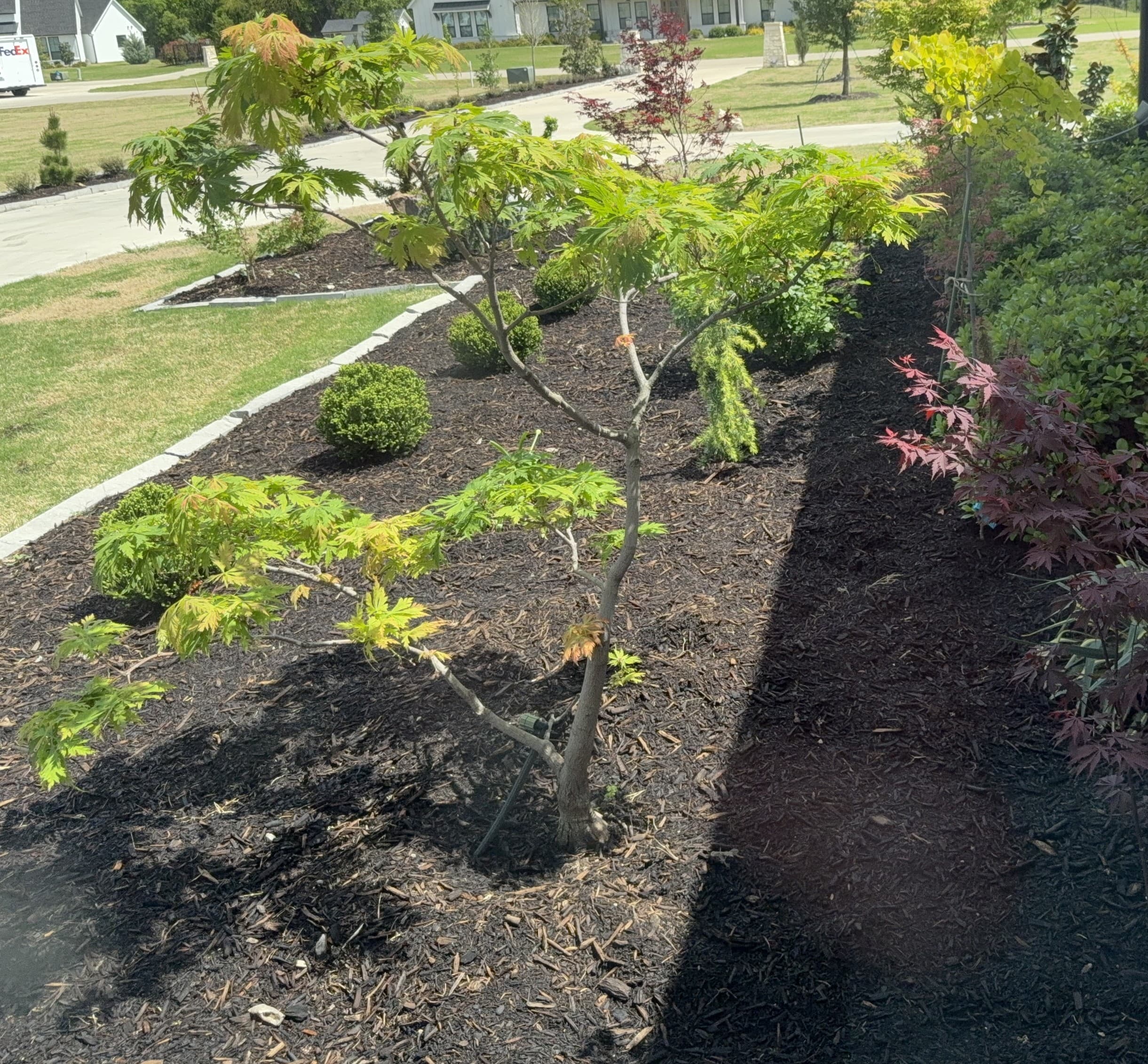
An extraordinary heirloom cultivar of the Full Moon Maple species. Known widely in the Western nursery trade as 'Aconitifolium', 'Mai Kujaku' is prized for its large, deeply incised, fern-like green leaves that are divided nearly to the petiole base into 9 to 11 sharp lobes. In early spring, it produces unusually large clusters of showy, purple-red flowers that create a beautiful contrast against the fresh green foliage. In autumn, it delivers a legendary, multi-colored display of brilliant yellow, radiant orange, and intense fiery crimson red.
Growing Specifications
- Height
- 12-15 feet
- Spread
- 10-12 feet
- Watering
- Regular, uniform deep-root irrigation
- Light
- Morning sun, afternoon shade
- Heat Tolerance
- Good once established with sheltered root zones
- Growth Rate
- Slow to Moderate (Develops a stout, multi-stemmed upright vase architecture)
- Soil Requirement
- Rich, highly organic, moist, well-draining, slightly acidic soil
North Texas Micro-climate Notes
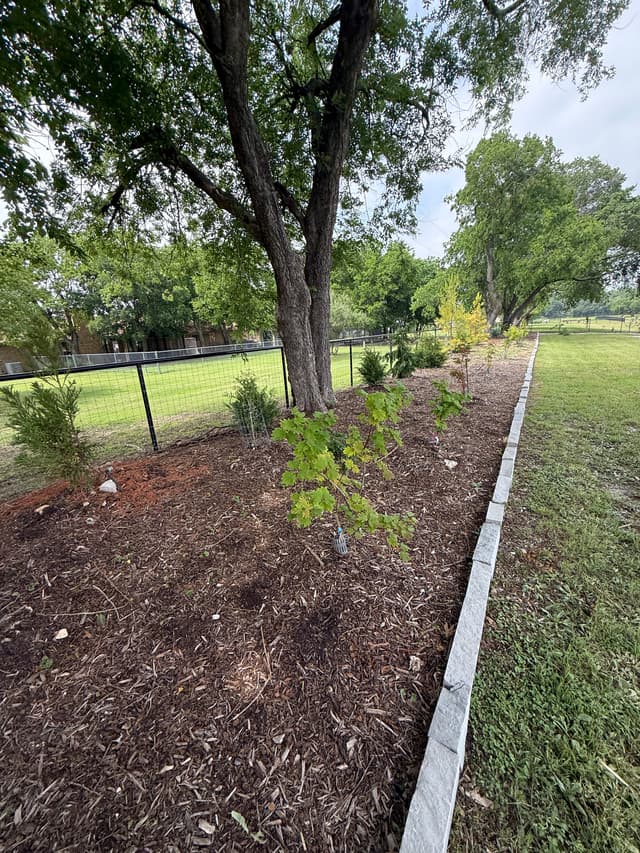
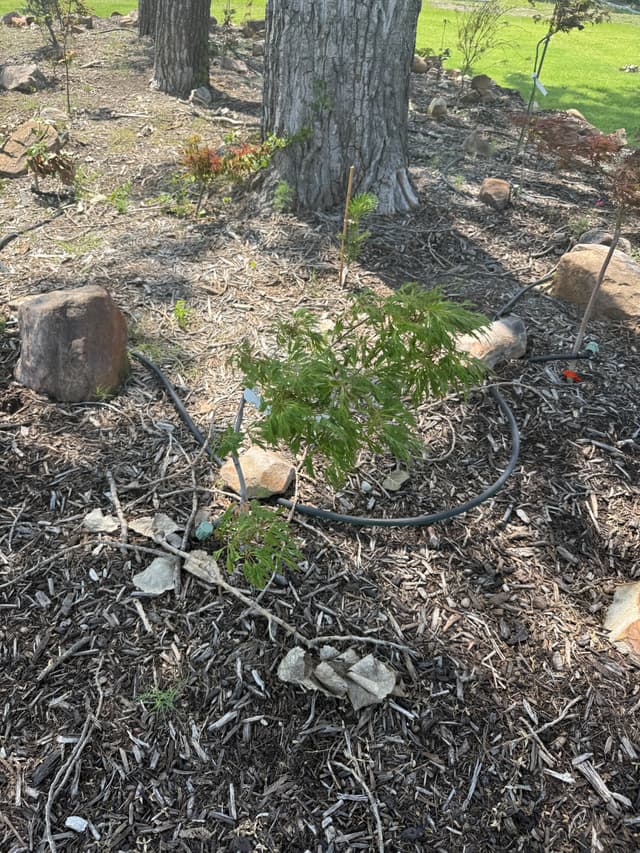
Expert Curated Selection. Because of its large leaf surface area, it can suffer from edge-singe if subjected to dry, whistling southern wind corridors. In North Texas, ensure it receives filtered afternoon protection from the 2 PM sun. It performs beautifully under a canopy of larger shade trees with a rich 3-to-4-inch layer of organic mulch covering the root system.
History & Lineage
- INTRODUCED BY
- Traditional Japanese Horticulture
- HISTORY
- An ancient Japanese cultivar originating in the mountain woodlands of Japan before being introduced to Western horticulture in the late 1800s. Formally cataloged across major international collections, it remains one of the most celebrated selections within the Acer japonicum family, earning the Royal Horticultural Society's prestigious Award of Garden Merit under its synonymous trade designation, 'Aconitifolium'.
Care Instructions
Plant in coarse, loosely structured soil; avoid unamended sticky clay. Ensure deep, systematic watering cycles during hot, dry spells. Pruning requirements are minimal—simply clear dead interior wood during winter dormancy to accentuate its elegant, muscular branch framework.
Landscape Usage
Superb as a multi-trunked understory structural specimen, a centerpiece accent along stone garden walkways, or an eye-catching focal anchor inside architectural Japandi courtyard spaces.
Fun Fact
The name 'Mai Kujaku' translates beautifully to 'Dancing Peacock' in Japanese. This poetic analogy references the magnificent way its large, filigree leaf lobes flutter and wave in the wind, mimicking the shifting, brilliant colors of a peacock spreading its tail feathers.
Awards
Royal Horticultural Society (RHS) Award of Garden Merit