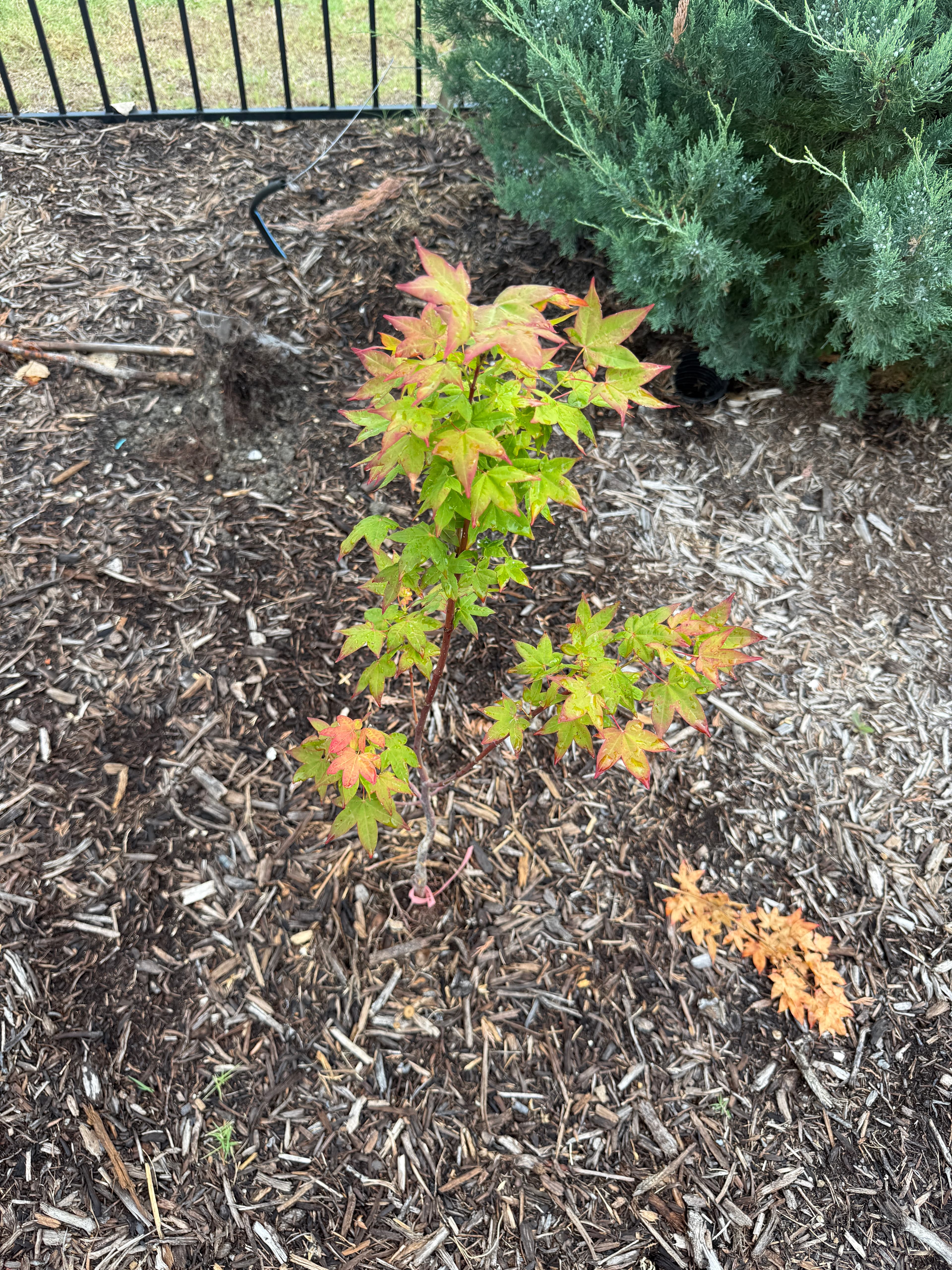
Maple
Olive Maple
Acer olivaceum
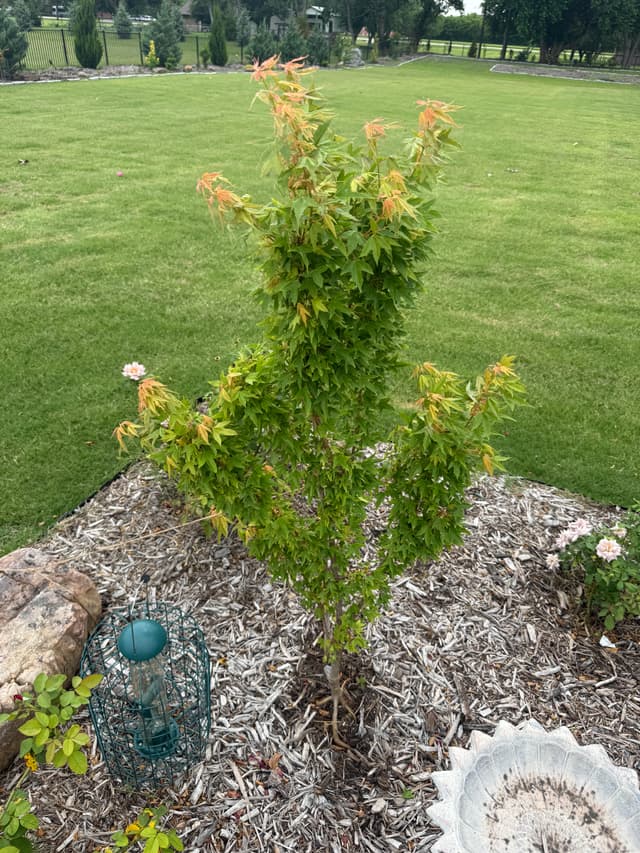
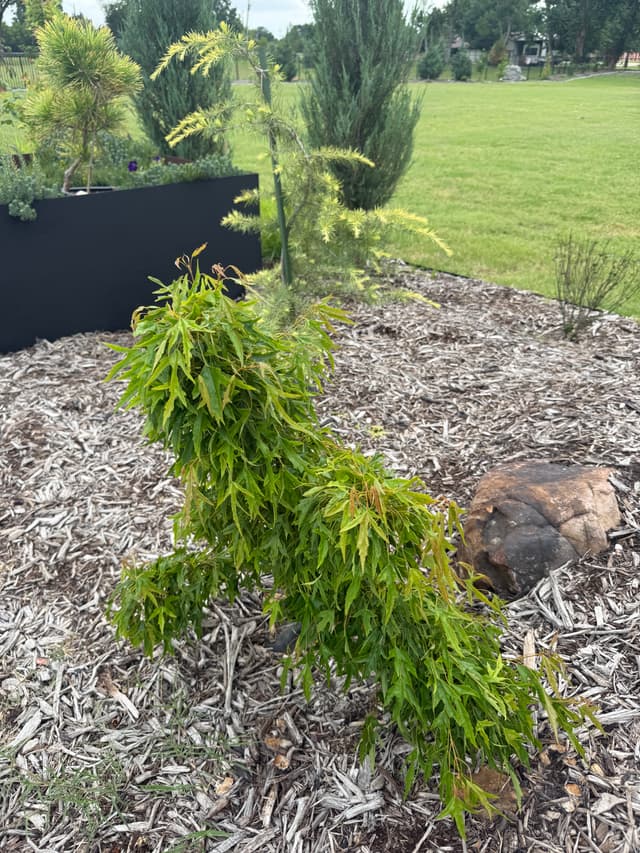
An exceptionally rare and highly sought-after Chinese species maple belonging to Section Palmata. The Olive Maple features a stunning seasonal color transformation, leafing out in early spring as a bright, luminous chartreuse before maturing to the deep, signature olive-green that gives the tree its name. In late autumn, it holds its leaves longer than many relatives, culminating in a jaw-dropping, multi-toned canopy of mottled yellow, warm apricot, fiery orange, and intense crimson red.
Growing Specifications
- Height
- 12-15 feet
- Spread
- 8-10 feet
- Watering
- Moderate; maintain consistent root moisture
- Light
- Morning sun, afternoon shade
- Heat Tolerance
- Excellent once established (when grafted)
- Growth Rate
- Slow to Moderate
- Soil Requirement
- Well-draining, highly organic, slightly acidic to neutral
North Texas Micro-climate Notes
Expert Curated Selection. Because specialty specimens are typically custom-grafted onto robust Acer palmatum understock, they exhibit fantastic heat resilience in our North Texas climate. Provide protection from the harsh 3 PM summer sun to shield the delicate chartreuse spring growth from drying out, and maintain an aggressive mulching schedule over the root zone.
History & Lineage
- INTRODUCED BY
- Traditional Asian Botanical Discovery
- HISTORY
- Native to the mountain forests of China's Zhejiang, Southern Anhui, and Eastern Jiangxi provinces. Historically logged in the wild and recognized as a distinct species by Chinese botanists W.P. Fang and P.L. Chiu in 1979, it was later introduced to elite Western collectors' circles via specialized botanical expeditions. It remains a crowning hallmark for high-end collectors due to its extreme scarcity in production.
Care Instructions
Plant in deeply fractured, well-draining soil to prevent root rot. Provide regular, deep-root hydration during the peak of summer, and ensure it is shielded from fierce, drying southwesterly winds.
Landscape Usage
Ideal as an understory focal point, a solitary accent near stone garden architecture, or curated as a high-end showcase specimen in a modern Japandi landscape design.
Fun Fact
Botanically, it is an incredibly close relative to the classic Japanese Maple (Acer palmatum) but stands out due to its distinct bark coloring, unique native provenance, and intense late-season color retention.
Awards
Highly revered in global maple conservation and specialty collector registries for its botanical rarity