Understanding Blackland Prairie Soil
North Texas sits in the Blackland Prairie region with heavy, alkaline clay soils (pH 7.5–8.5) that drain poorly and restrict oxygen. These soils expand when wet and crack severely during drought — suffocating maple roots in summer and freezing them in winter.
Japanese maples (Acer palmatum) and most deciduous trees need well-drained planting sites to establish healthy root systems. The key is not replacing the soil but amending it gradually.
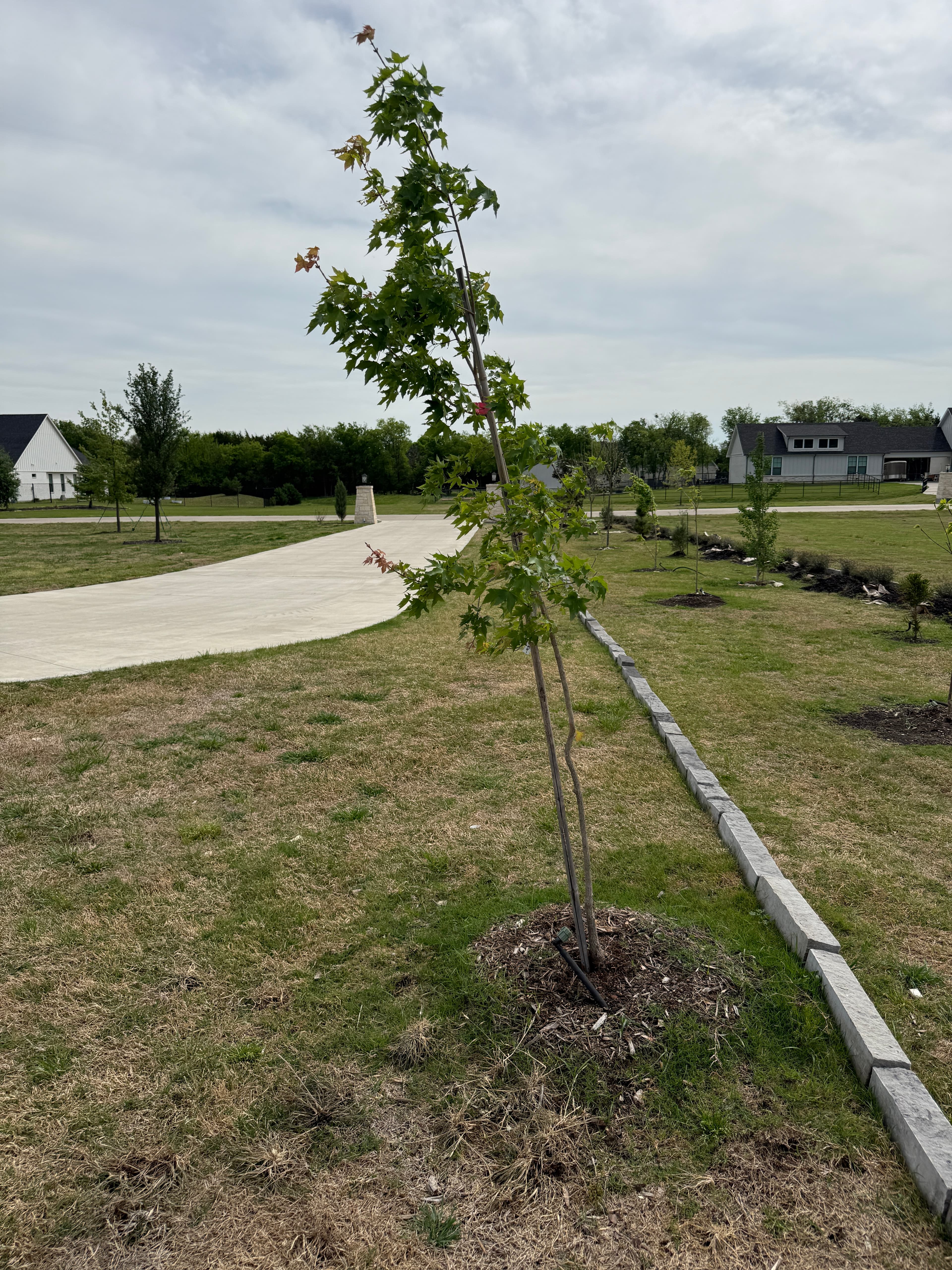
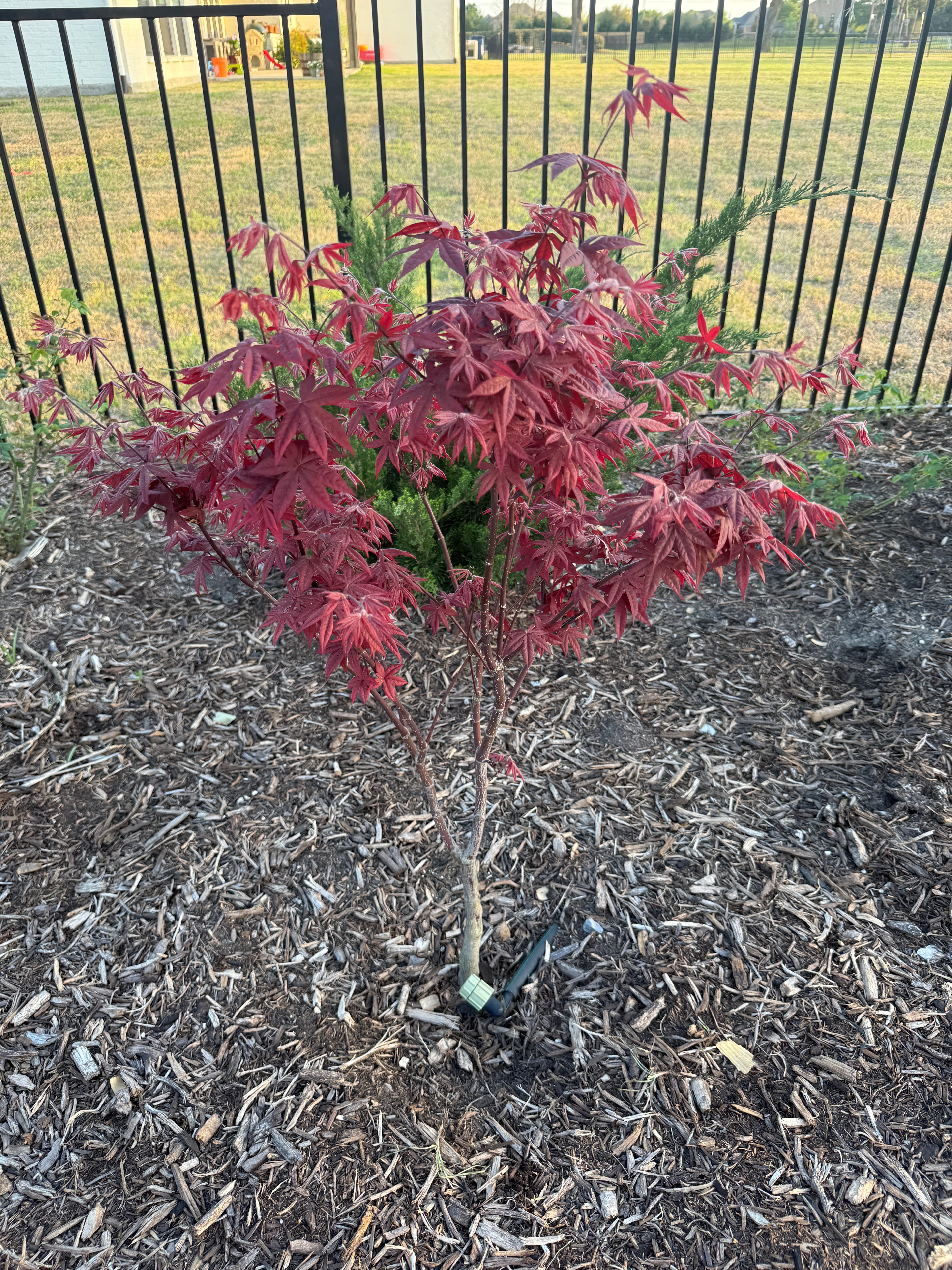
Newly Planted Specimens in Amended Beds
.JPG&w=3840&q=75)
The Right Approach: Wide & Shallow
For North Texas climate, wide-and-shallow planting beats narrow-and-deep holes. Dig a hole 3–4 feet wider than the root ball, only as deep as the root ball height. Mix native clay with 40–50% composted pine bark and coarse sand to improve drainage around the root zone.
The goal is to create a 'saucer effect' — water pools across the wide surface rather than draining instantly through unamended native soil.
Soil Prep Checklist
- ✓Test soil pH (target: amend to 6.5–7.0 for maples)
- ✓Dig hole 3–4× wider than root ball
- ✓Prepare 40% composted pine bark mix
- ✓Build raised mound if drainage is poor
- ✓Apply 3-inch shredded bark mulch ring
- ✓Install drip irrigation emitter near root flare
Found this guide helpful?
Contact Us for Personalized Advice