A Japanese Maple can live in Texas — it just needs the right variety and the right patch of dirt.
The commenter on r/gardening who reported killing three Japanese maples despite planting them in shade wasn't doing anything wrong to her maples. She was growing the wrong ones for our latitude, period. The Pacific Northwest advice everyone quotes — east-facing wall, partial shade — makes sense when summers peak around 85 degrees and evaporative demand is measured in grams of water per square meter a day. Dallas sees 102. The advice doesn't just miss on sun exposure; it misses on why Texas maples die in the first place.
The root zone cooks, not the canopy. We don't get scorched leaves from afternoon sun on Bloodgood planted east of an oak; we get cooked roots because the soil under that same live oak hit 120 degrees once last June and stayed there for nine hours. Leaves on a healthy, well-watered Bloodgood will tolerate direct sun in zone 8 through September without curling at the margins. Dead roots do not recover whether they're in full shade or full sun.
Five Varieties That Actually Work Here
We've been growing maples on Blackland Prairie clay for six years across three planting spots — full afternoon exposure (west fence line), mixed canopy under a live oak (central plot), and morning-only sun (east edge of the house) — and these five survived every Texas summer without intervention beyond routine watering during extended dry spells.
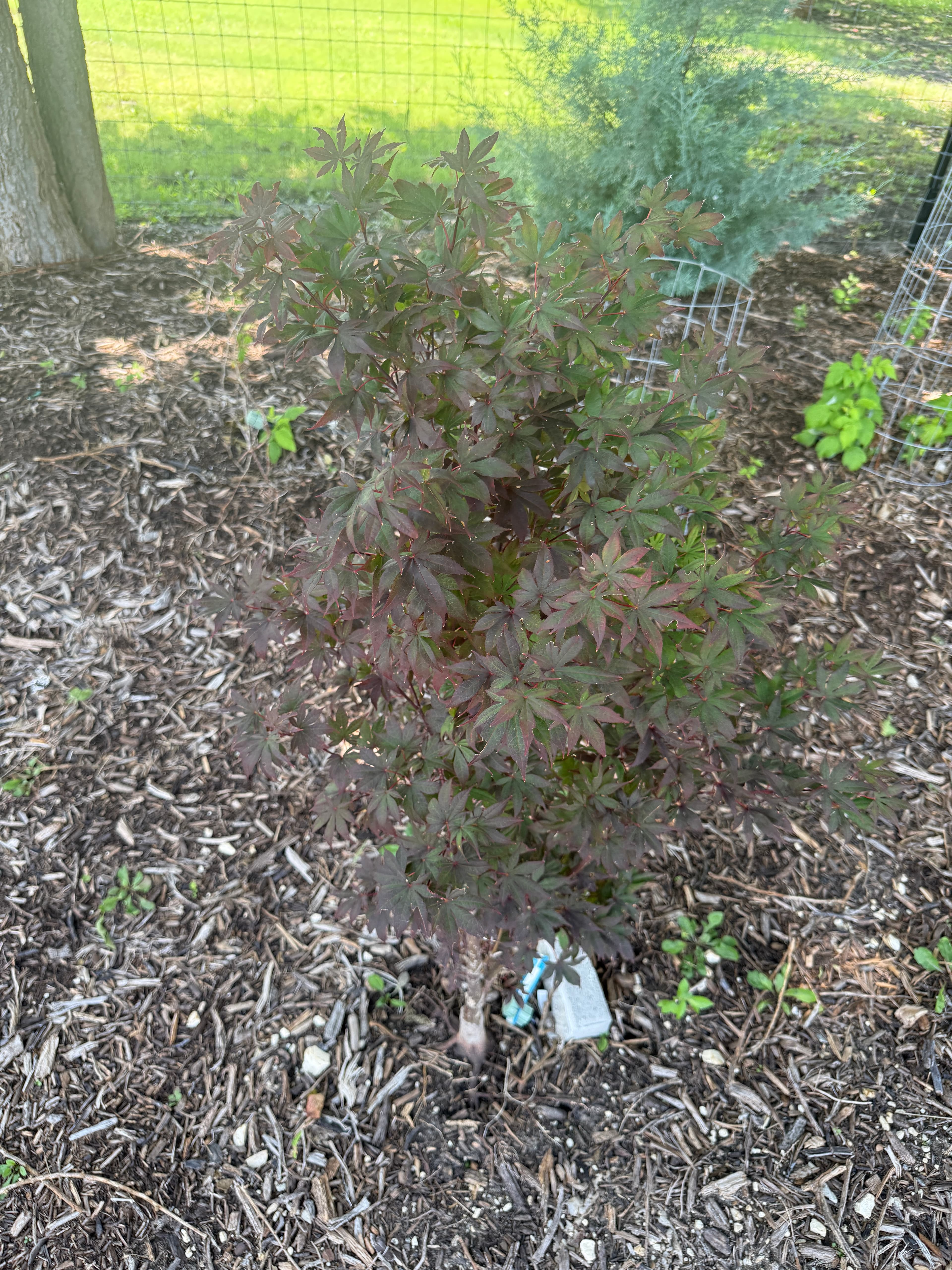
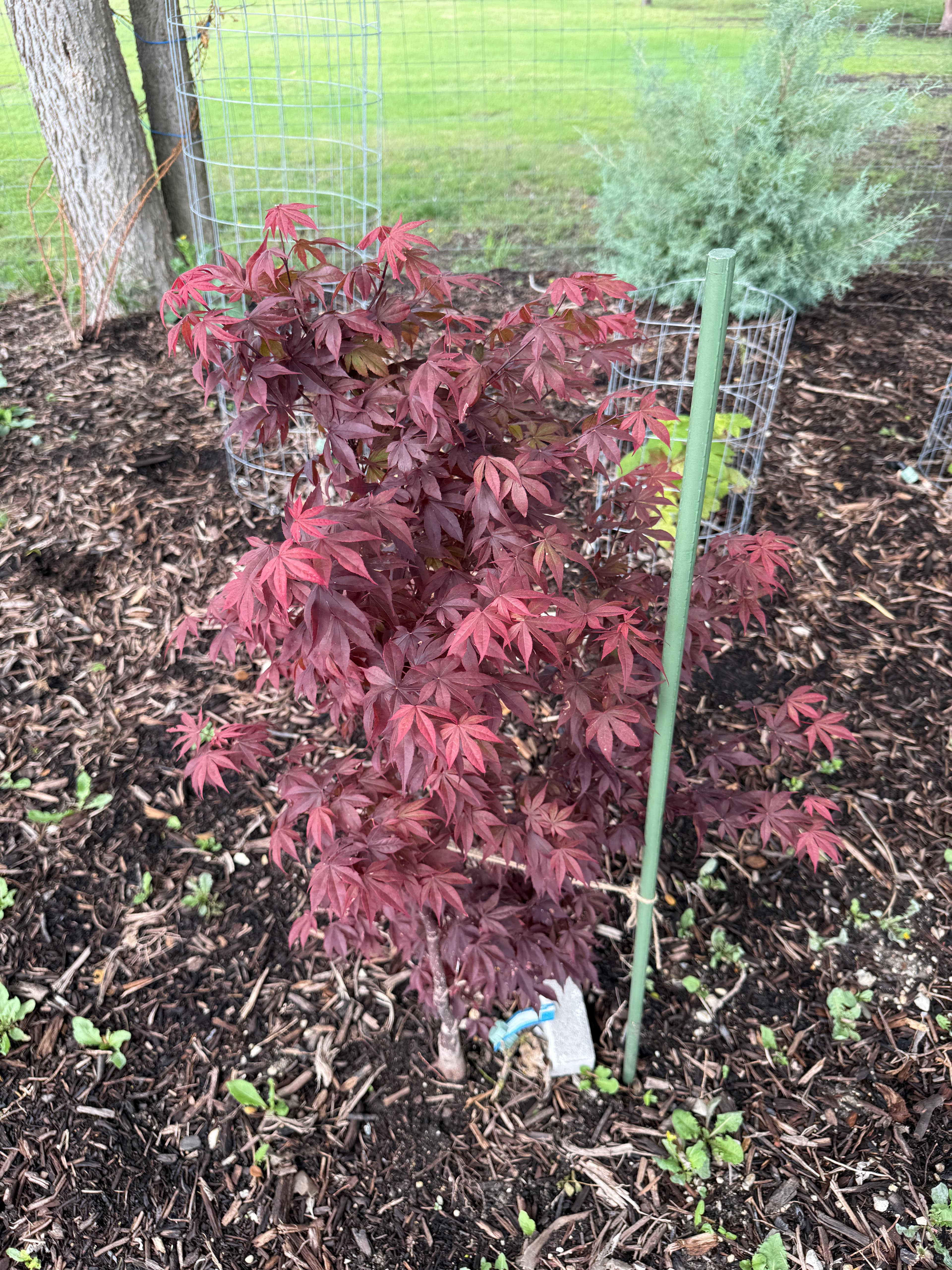
1. Bloodgood (Acer palmatum 'Bloodgood')
The workhorse. Dark maroon-purple foliage that holds through August when lesser cultivars turn brown at the edges, an upright-growth habit that reaches 15-20 feet tall with a 12-foot spread at maturity, and graft compatibility on its own roots means it doesn't girdle itself at the bud union like cheaper nursery stock. Plant it east of your oak or along any east-facing structure where it gets morning light only. We have one in our central mixed-canopy plot that survives with mulch but requires biweekly irrigation during July and August dry spells — you can push Bloodgood further than people warn, but zone 9 summer soil temperature is the ceiling.
2. Shaina (Acer palmatum 'Shaina')
The compact option for anyone whose yard space runs out around the porch steps. Dwarf habit, 4-5 feet in eight years according to Missouri Botanical Garden's plant database, dense branching that fills out without pruning. New foliage emerges bright red and matures through the season to deep maroon-red — this red intensity survives longer into summer than we've seen on any larger Japanese maple in our zone.
We keep ours along the eastern house border where it catches sunrise only. Even there — morning sun on Blackland clay — it needs mulch, because dwarf size doesn't mean dwarf roots: a 5-foot tree still puts its root zone directly under July's hottest slab of air in our yard. The Missouri Botanical Garden notes hardiness zones 6-9a and tolerates temperatures down to roughly -10 degrees F.
3. Osakazuki (Acer palmatum var. matsumurae 'Osakazuki') — the big one, planted far from everything
If you want a maple that works as a yard tree instead of an accent, this is it. It gets to 20-25 feet tall with a comparable spread, grows fast enough for Texas winters (it adds roughly two feet per year once established), and its huge leaves turn vivid orange, crimson, and gold in autumn — the most reliable fall color we've seen on any palmatum variety planted out here.
Osakazuki tolerates heat better than most palmatums because it comes from the matsumurae group, a subspecies adapted to more continental climates than its cousins. We grow ours at the far edge of our yard with morning sun only, and it survives full Blackland clay without amendments — we're not planting it in compost or raised beds like lesser cultivars. The only thing that killed an Osakazuki around here was a neighbor's dog wrapping a wire fence cable around its trunk and strangling growth at year four; the tree itself had no trouble.
4. Sango-kaku (Acer palmatum 'Sango-kaku') — for the bark
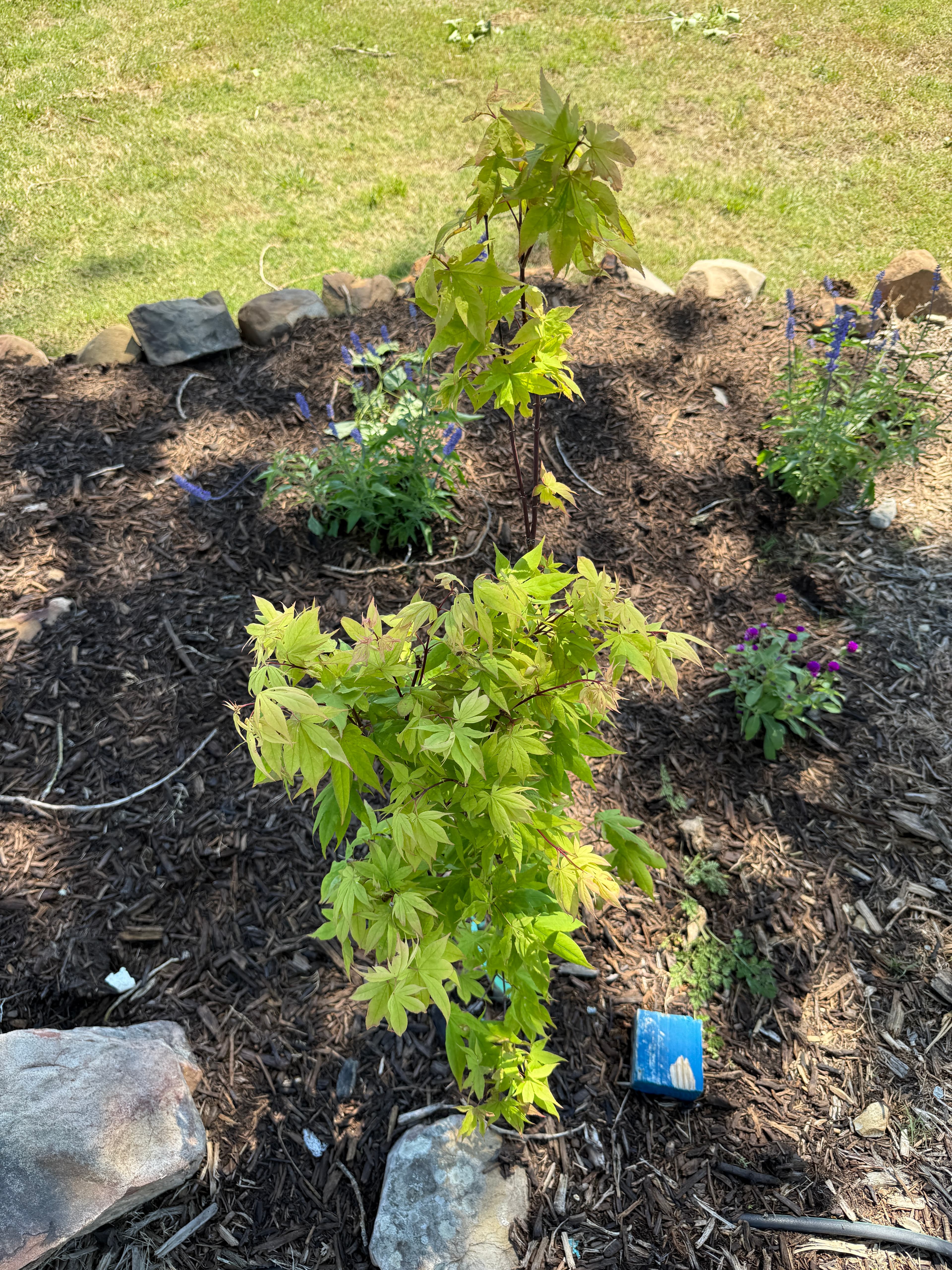
The Coral Bark Maple doesn't ask much from you because it spends most of its year looking like a green tree until you strip the leaves with fall winds and reveal the neon-pink-red branches that earned it its name. ("Sango kaku" literally means "coral bark" in Japanese.)
We keep ours on the east border where morning sun triggers the spring flush and keeps foliage color from bleaching — full afternoon exposure turns the green flat by late July on this one, so it's not as tough as Bloodgood under a Texas sun. But its bark is the best winter display of any maple we grow here, brighter than anything on Fire Dragon.
5. Fire Dragon (Acer truncatum 'Fire Dragon') — the honest answer to "what maples handle Texas sun?"
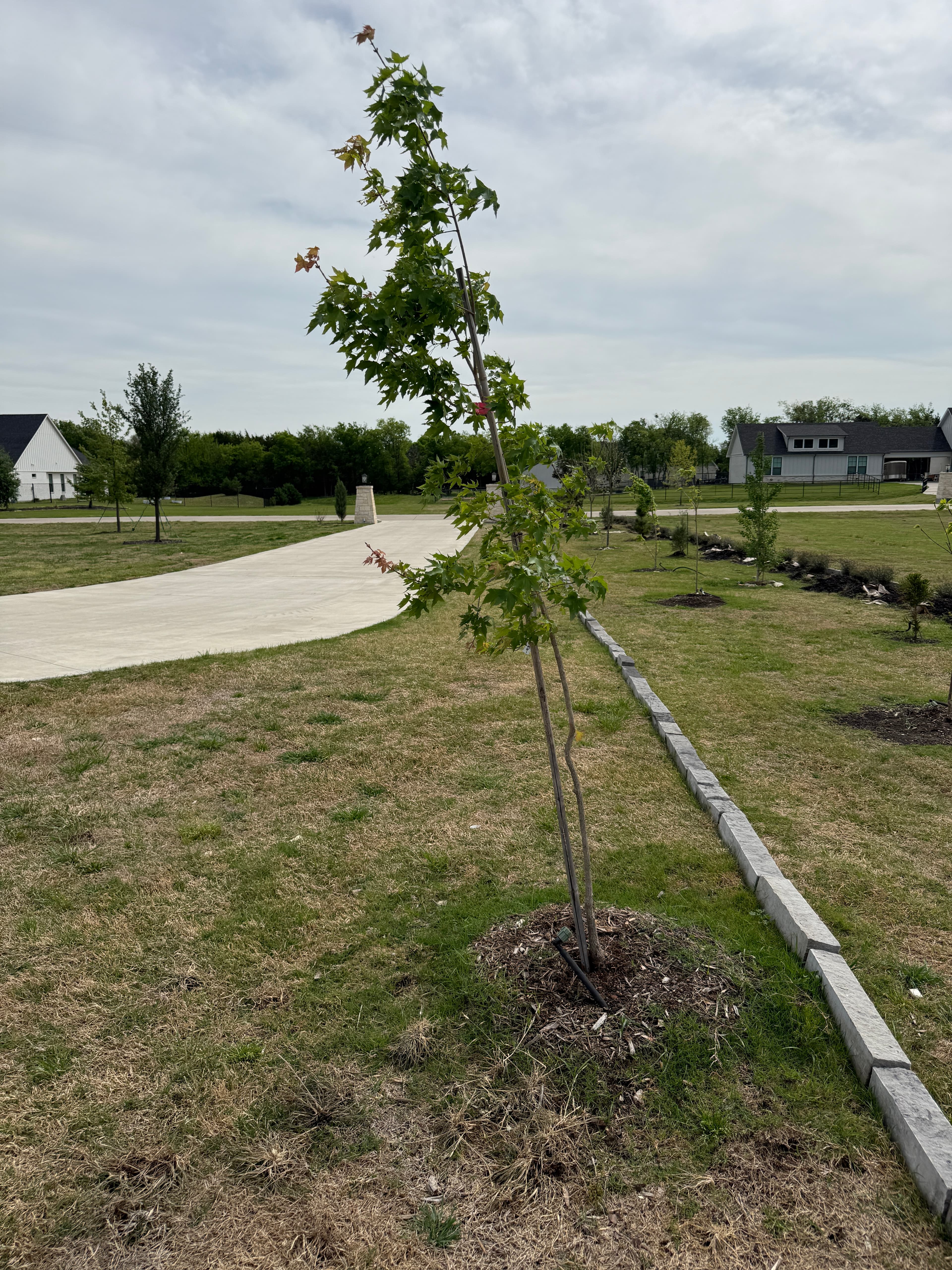
This one isn't even a Japanese maple. It's an Acer truncatum — a Shantung maple hybrid patented as variety 'Fire Dragon' in 2006 (PP17367), discovered in 1999 and introduced by Metro Maples. Its extreme heat resistance is well documented (Cornell's Woody Plants cultivar database notes "extreme heat resistance; notably red fall color"), but people who came looking for palmatum won't find it among them because Fire Dragon comes from truncatum genetics.
We planted ours on the west fence line where nothing else survives past year two. It grows to 25-35 feet at maturity — a large tree, not an accent — and turns brilliant red in fall. On this site, with full Blackland prairie exposure and July soils that regularly top 100 degrees Fahrenheit at the surface, Fire Dragon is the only maple we grow that doesn't need shade cloth or extra irrigation once it's established. The leaves look different from a palmatum (less deeply cut, more robust) and the growth habit is upright and stiff rather than lacy and spreading, so it won't fit every yard. But if your site has brutal afternoon exposure, this is the answer instead of trying to force a variety that can't tolerate your microclimate.
The Decision Tree
Start here: your site. Not the cultivar. The site determines which of these five you get.
Zone 8a, west or south exposure, full afternoon sun? Fire Dragon only — it handles heat the others cannot.
Zone 8a, east-facing with at least four hours of morning sun? Bloodgood, Shaina, Osakazuki work depending on how much canopy coverage your yard actually has and how much ground you'll sacrifice to a 6-foot versus 20-foot tree.
Zone 8a, full shade from dawn to dusk under dense oak or mesquite canopy? That's too much shade for any maple at this latitude — they'll grow spindly and never develop proper fall color in our soils. Open the canopy or move to a different species entirely.
Zone 9? Bloodgood with mandatory afternoon shade is your ceiling on palmatums; Fire Dragon for full exposure. Every other cultivar will burn at one edge by August no matter how you position it unless you irrigate daily and replace mulch twice per season.
Soil, Mulch, and Water — The Part People Get Wrong
Blackland Prairie clay isn't a problem you fix with amendments the way West Coast gardeners fix alkaline soils by mixing in peat moss. Our pH runs 7.5 to 8.2 naturally. What matters is aeration. We dig our maples on raised mounds six inches above grade and cover every inch of root zone with four inches of pine bark mulch — not shredded hardwood, which compacts into a concrete layer under Texas summer rain and suffocates roots that are already drowning in heavy clay.
Pine bark holds its structure. It lets rain infiltrate instead of sheeting off the surface like it does on bare clay and keeps root zones noticeably cooler than surrounding ground in July — what matters when a thermometer reads 104 at mid-afternoon and the air feels thick enough to chew.
On irrigation: establish any maple you plant with daily water for three weeks, then drop to twice weekly through October once it's pushed new growth. When that first dry spell hits — typically August in Central Texas — resume daily watering for ten days unless it rains. That's how long the surface clay stays baked after a clear stretch, and new roots haven't yet penetrated deep enough to reach the moisture table your established oak trees sip from without trying.
Plant Fire Dragon at west-facing sites where no other maple survives zone 9 summer heat. Use Bloodgood or Shaina for east-facing planting spots on Blackland clay when you want foliage color — go with Bloodgood if your yard's big enough for a tree that'll reach full height, Shaina if it won't. Grow Osakazuki as a standalone landscape specimen far from hardscape where its 25-foot width won't crack anything. Keep Sango-kaku for winter bark display in morning light only. Raise every maple six inches above grade on our clay. Cover the root zone in four inches of pine bark mulch and replace it when the Texas summer rains turn it flat. Water daily during your first ten days after any dry spell breaks, no exceptions — those are the moments a dying root sends one last gasp signal.
Found this guide helpful?
Contact Us for Personalized Advice