The Texas Heat Challenge
North Texas summers regularly exceed 100°F for weeks at a time. Newly planted trees need consistent moisture for the first two growing seasons. Even established maples in our climate will show leaf scorch during extreme dry spells — but proper irrigation prevents this.
The harsh afternoon Texas sun (especially west-facing exposure) can raise foliage temperature to 120°F+, causing rapid desiccation. Strategic watering combats this.
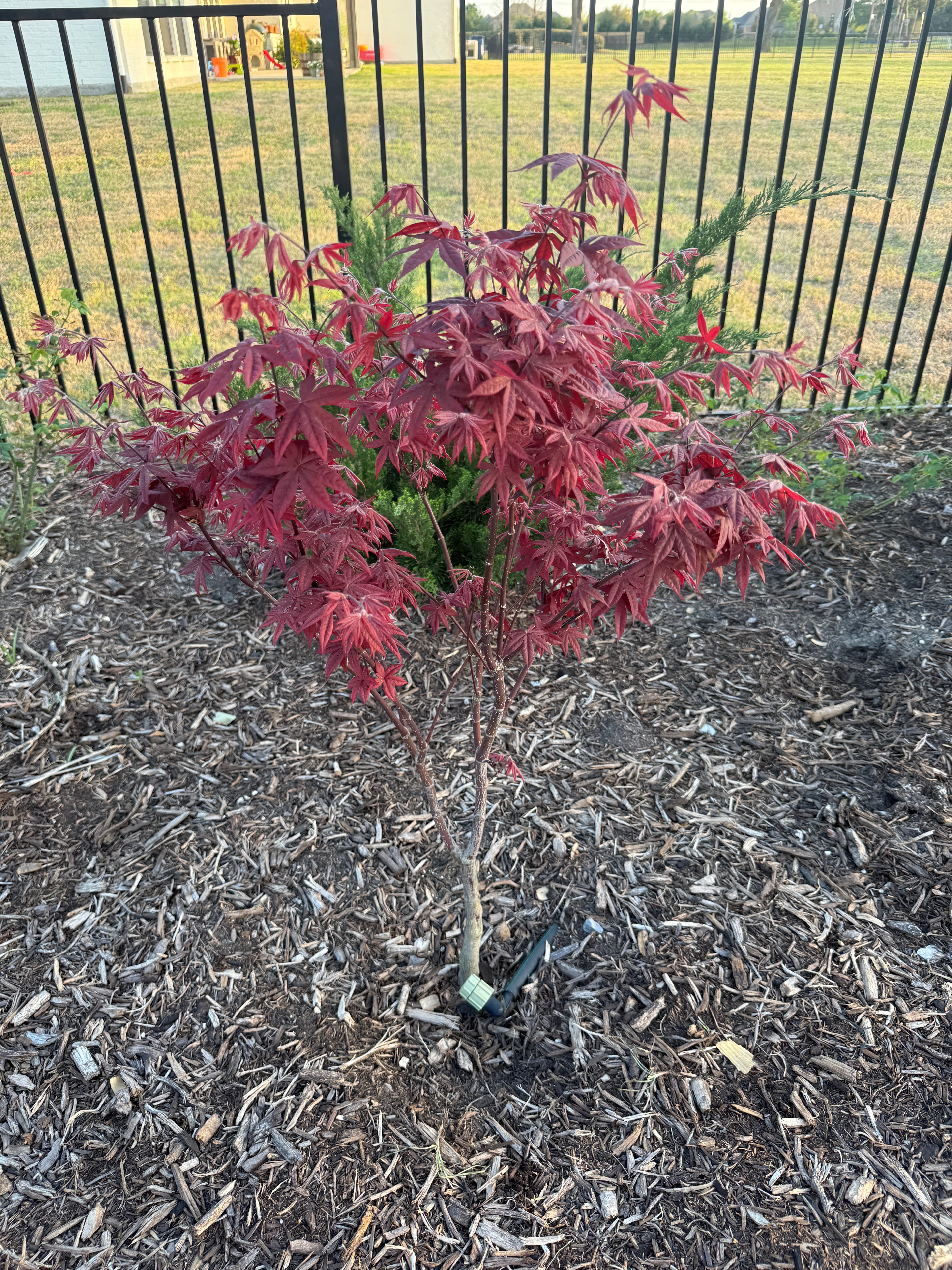
Mulch and Drip Lines in Our Own Beds
.JPG&w=3840&q=75)
.JPG&w=3840&q=75)
Deep Watering Protocol
Water deeply but infrequently — this encourages deep rooting rather than shallow surface roots that bake in summer heat.
Week 1–4 (Establishment): Water every other day. Slow-flow hose for 30–45 minutes at the drip line. Month 2–3: Water 2× per week. Same duration. Established (Year 2+): Water 1× per week during normal conditions. Every 3–4 days during heat waves (>100°F).
Each deep watering should penetrate 18–24 inches into the soil profile.
Mulch Everything — Our Golden Rule
Apply 2–3 inches of shredded bark mulch in a wide ring around each tree (extending to the drip line). Keep mulch 3 inches away from the trunk to prevent rot.
This mulch layer: - Conserves 40–50% more soil moisture than bare ground - Moderates soil temperature by up to 25°F - Slowly adds organic matter as it breaks down - Suppresses weed competition for precious water
Summer Irrigation Checklist
- ✓Install drip emitters at drip line (not at trunk)
- ✓Set reminder: check irrigation monthly
- ✓Apply fresh mulch layer each spring
- ✓Monitor for leaf scorch on Acer palmatum
- ✓Adjust schedule during heat waves (>100°F)
- ✓Install a soil moisture probe to avoid over-watering
Found this guide helpful?
Contact Us for Personalized Advice